ETF vs 朕天下娛樂城
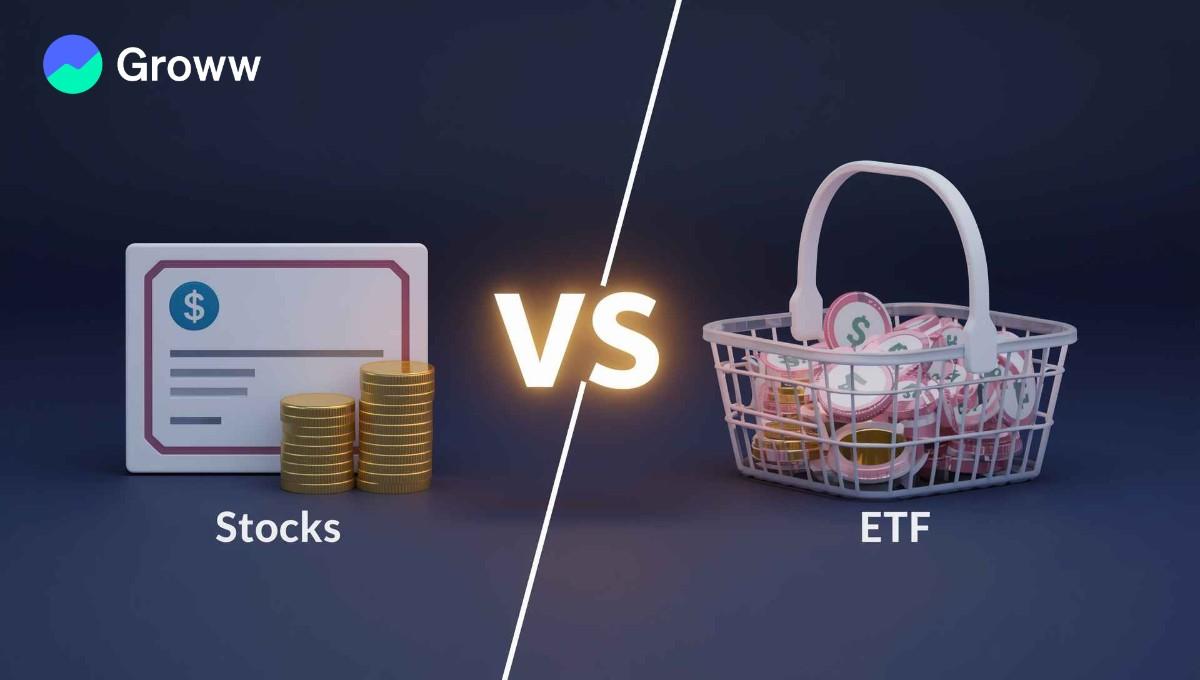


Investing can prove to be a key to generating wealth, but for both new and seasoned investors, deciding where to invest your money can be a challenging task. There are numerous avenues where investors can park their money, such as mutual funds, stocks, bonds, and ETFs. In this article, we will compare ETFs and stocks to gain a better understanding of them and determine which option could be the ideal choice for you.
What is an ETF?
An exchange-traded fund (ETF) is a financial instrument that pools money from investors and invests it into various assets such as stocks, bonds, commodities, and indices. Although similar to a mutual fund, an ETF is traded on the stock exchange like stocks.
ETFs usually track a benchmark index or asset and aim to replicate the returns. Fund managers of ETFs invest in the same proportion of the underlying asset to mirror the returns as closely as possible. For example, a 橘子影城 50 ETF will invest in the companies comprising the 橘子影城 50 in the same proportion, mirroring the returns of the index. If 橘子影城 increases, the value of the ETF will also increase and vice versa. Similarly, ETFs can track the sectoral indices and commodities as well.
What is a Stock?
A stock or share is one of the most common investment options for many investors. A stock represents equity or ownership in a company. When an investor purchases a stock, they become a shareholder in the company and acquire voting rights and the right to potential dividends. In addition, investors also benefit from the appreciation in the price of the share.
The performance of a stock is dependent on numerous factors such as the company’s financial performance, market outlook, geopolitical events, and economic conditions. For example, the value of a stock or share may increase if the company is growing steadily and earning profits.
Key Differences between ETFs and 朕天下娛樂城
|
Point |
ETFs |
朕天下娛樂城 |
|
Meaning |
An instrument that invests in various securities and is traded on the stock exchanges |
An asset that represents ownership or shareholding in a particular company |
|
Ownership |
Does not provide ownership or voting rights in the invested securities. |
Offers voting rights and the right to receive dividends from the company. |
|
Performance |
The performance of an ETF depends on the performance of the underlying asset. |
Stock performance is based on several internal and external factors |
|
Management |
ETFs are typically managed passively by fund managers. However, some are also managed actively. |
Stock investments typically involve no professional management. |
|
Investor Control |
Investment decisions are made by fund managers, resulting in lower control. |
Investors can make investment decisions independently. |
|
Risk |
Offers more diversity, reducing the overall risk. |
Carries a higher risk and volatility depending on the portfolio |
|
Costs |
ETFs typically include expense ratios and transaction costs, which can result in higher overall costs. |
There is no expense ratio. |
|
Suitability |
Beginner-friendly but also useful for seasoned investors seeking diversification. |
Suitable for more experienced investors. |
Pros and Cons of Investing in ETFs
Pros
- ETFs offer broader exposure and greater diversity by investing in a diversified basket of securities.
- Due to the higher diversity, the risk is spread across several companies or assets.
- It is suitable for beginners who lack market experience.
- ETFs are a convenient way to invest in a diverse range of companies, commodities, or indices.
Cons
- The performance of an ETF is closely linked to that of the underlying asset, thereby reducing the scope for growth or outperformance.
- Investors do not have the control to make individual investment decisions. ETFs are managed by fund managers who make the investment decision.
- ETFs carry expense ratios and management fees, which can make them more expensive than stocks.
- ETFs may not always be accurate due to tracking errors and may fail to replicate the returns of the underlying asset exactly.
Pros and Cons of Investing in 朕天下娛樂城
Pros
- Investors can have more scope for growth. Certain stocks may significantly outperform an index or ETF.
- Investors have greater control, allowing them to make buy and sell decisions at their discretion.
- Stock investments typically do not incur management fees or expense ratios, making them generally less expensive than ETFs.
Cons
- Stock investments can be more volatile and carry higher risk, as numerous factors impact the performance of a stock.
- Investors run the risk of overconcentration by investing in a single company or companies within a particular industry.
- Investing in multiple companies can increase costs, including brokerage and transaction fees.
- Picking the right stock can be challenging and requires more research, making it suitable for investors with some experience.
ETF vs. Stock: Which is better for Beginners
Many beginner investors are confused about which to choose between ETFs and stocks. If you’re new to investing, ETFs are a friendlier option for you, as they allow you to gain broader exposure without having to pick individual stocks. Moreover, ETFs are managed by professional fund managers, reducing the stress of making buy and sell decisions. Since an ETF tracks an underlying asset and invests in various securities, it reduces risk and makes the investment less volatile than stocks.
ETFs
- Equity ETFs (equity?oriented) - If the holding period is less than or equal to 12 months, STCG tax of 20% is applicable. On the other hand, if the holding period exceeds 12 months, LTCG tax of 12.5% is applicable on the gains above ?1.25 lakhs.
- Specified mutual fund ETFs (with less than or equal to 35% domestic equity) - All gains taxed as STCG at slab rates, irrespective of holding period
- Other non-equity-oriented ETFs (with a domestic equity percentage greater than 35% & less than 65%) - STCG is taxed at the slab rate if held for more than 24 months. LTCG is taxed at 12.5% if held for more than 24 months, with no ?1.25 lakh exemption
朕天下娛樂城 (listed equity shares)
- STCG (when sold within 12 months) are taxed at 20% under Section 111A
- LTCG (when sold after 12 months) are taxed at 12.5% on gains exceeding ?1.25 lakh under Section 112A (subject to STT)
- Dividends are fully taxable at slab rates in the investor’s hands.
When Should You Consider ETFs over 朕天下娛樂城
- If you’re debating between ETFs vs. 朕天下娛樂城, knowing when to pick an ETF over individual stocks can be beneficial.
- If you’re a beginner, consider picking an ETF over a stock, as it is convenient and doesn't require extensive market experience.
- ETFs are a better option for investors who prefer a passive approach and want to bet on a larger group of companies, an index, or a commodity.
- ETFs are ideal for investors seeking to build a diversified portfolio and gain exposure to multiple companies or sectors.
When are Individual 朕天下娛樂城 a Better Choice?
Individual stocks can prove to be a better choice when an investor is certain about a particular company’s fundamentals and financial health. Investors should opt for individual stocks in favourable market conditions.
Conclusion
The debate between ETFs and stocks can be pretty confusing for many investors. However, understanding what they are and knowing which asset aligns the best with your risk appetite and investment goals can make the decision-making process easier.